Community
Park City pilot joins Backcountry Santa mission, delivers gifts by plane to Navajo Nation

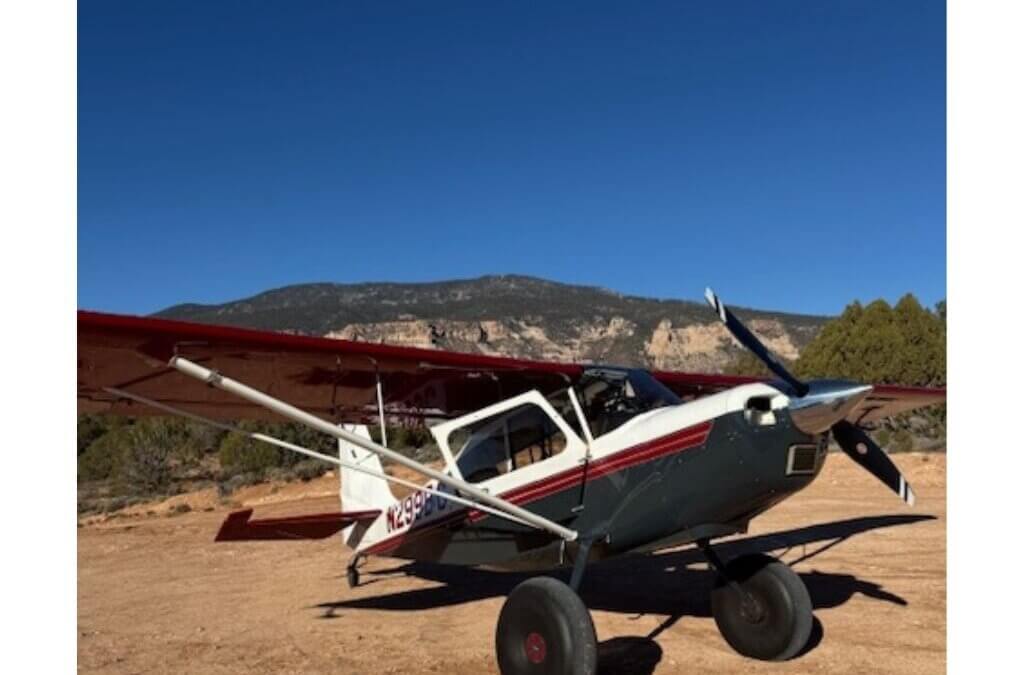
A backcountry aircraft sits on a dirt landing strip near Navajo Mountain on the Navajo Nation during the Back Country Santa holiday airlift, where volunteer pilots deliver boxes of gifts and essentials to remote communities. Photo: Jason Dittmer
PARK CITY, Utah — Jason Dittmer had never heard of Backcountry Santa until an email landed in his inbox about six weeks ago.
He joined the Utah Back Country Pilots Association because, as he put it, his “passion as a middle-aged male is flying in the back country.” He was surprised by how quickly a hobby flight became a service mission, and by how big the operation grew.
“Flying, as a general aviation pilot, is a hobby for me, so being able to use it for something of service really spoke to me,” Dittmer said. “That’s what drew me to it.”
Backcountry Santa is a volunteer-run holiday airlift that organizes pilots to deliver boxes of gifts and essentials to tribal communities in the Intermountain West. The primary focus is the Navajo Nation and Hopi Tribes in southern Utah and northern Arizona, according to mission emails sent to participating pilots.
This year’s flight day was Thursday, Dec. 11, with pilots fanning out from a hub airport in Kayenta, Arizona, to additional drop points, including pavement and backcountry destinations. The mission has grown quickly: Dittmer said organizers told pilots about a dozen aircraft participated in 2019, and about 90 planes flew this year.
“It was fascinating,” he said. “90 planes were flying around between four airports. And I think that’s probably more traffic than they’ve ever seen.”
Dittmer’s own day began in Salt Lake City, at a hangar he described as “stacked floor to ceiling with boxes.” Pilots can pick up boxes there ahead of the flight, then depart at first light if the weather cooperates.
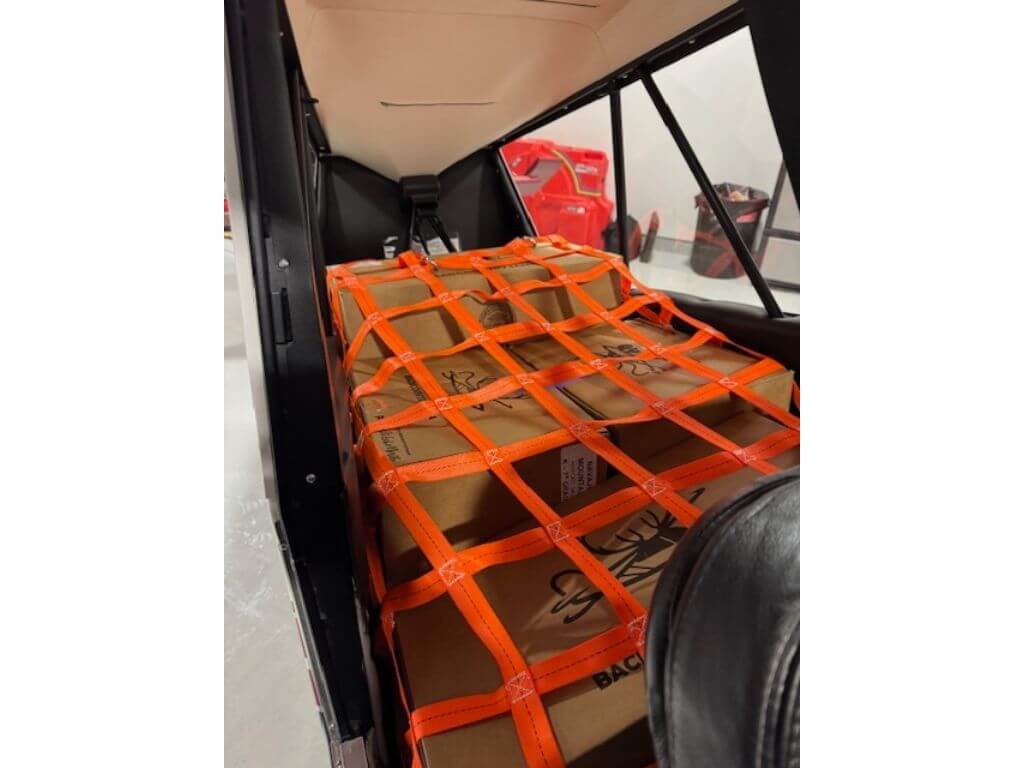
“When I arrived, I immediately realized the size of this organization and saw the significant work that had gone into it,” he said. Before starting the engine, volunteers weigh the boxes, open the cargo doors, and carefully measure the available space. In small aircraft, space usually runs out before weight limits do.
“It’s important in aviation to make sure that you know how much everything weighs,” Dittmer said. “Each box is weighed, so you know exactly how much you’re taking. Then you’ve got to try and squeeze it into the aircraft.”
His aircraft, he said, could only take six boxes. Other pilots, flying larger planes, can take far more.
Mission materials sent to pilots laid out a tight system: standardized box sizes, weights, and labels; color-coded tape tied to destinations; and a conservative loading rule of thumb: plan to carry about 80% of what you think you can, leaving room for safety margins.
The boxes themselves are assembled for specific age groups and needs — including elders, infants, toddlers, K-7, and 8-12 — a detail Dittmer said impressed him because it showed how intentionally the work had been organized.
The flying, too, is divided by skill set and equipment. Some aircraft are best suited for pavement. Others are designed for dirt, short strips, and rough surfaces. “Only certain aircraft can land on a dirt road,” Dittmer said. “It was neat to see pilots with planes geared towards pavement, and pilots like us with aircraft that could land in the dirt.”
Dittmer’s first stop was Navajo Mountain, a small community he described as remote and short on infrastructure. “Navajo Mountain is a small Native American community on the Navajo reservation, but there are very few facilities,” he said. “While the FAA has designated Navajo Mountain as having an airstrip. In reality, the airstrip is a dirt road, so that’s where we landed.”
On the ground, he said, the delivery is brief by necessity. Pilots must balance daylight, distance, and a steady stream of aircraft arriving behind them. These flights often lack the kind of air traffic control most travelers take for granted. “There’s no tower, no air traffic control in these places,” he said. “So you’re all talking to make sure you give planes space and don’t create a bottleneck.”
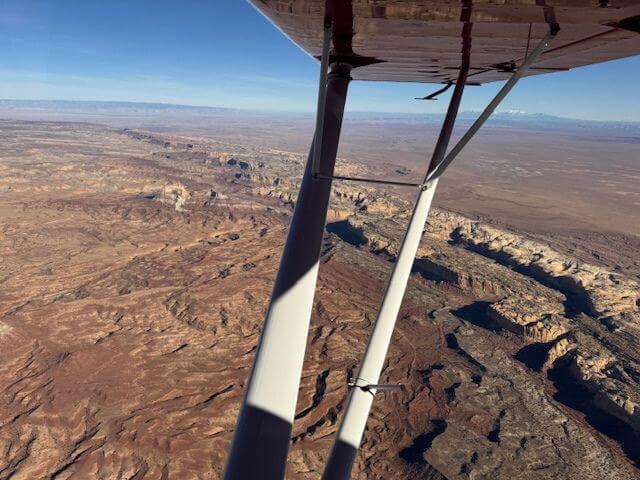
The rhythm is almost surgical: “You land, turn off your aircraft. Get out, unload the boxes, get back in,” he said. “Start your aircraft. Make sure nobody is landing or taking off.”
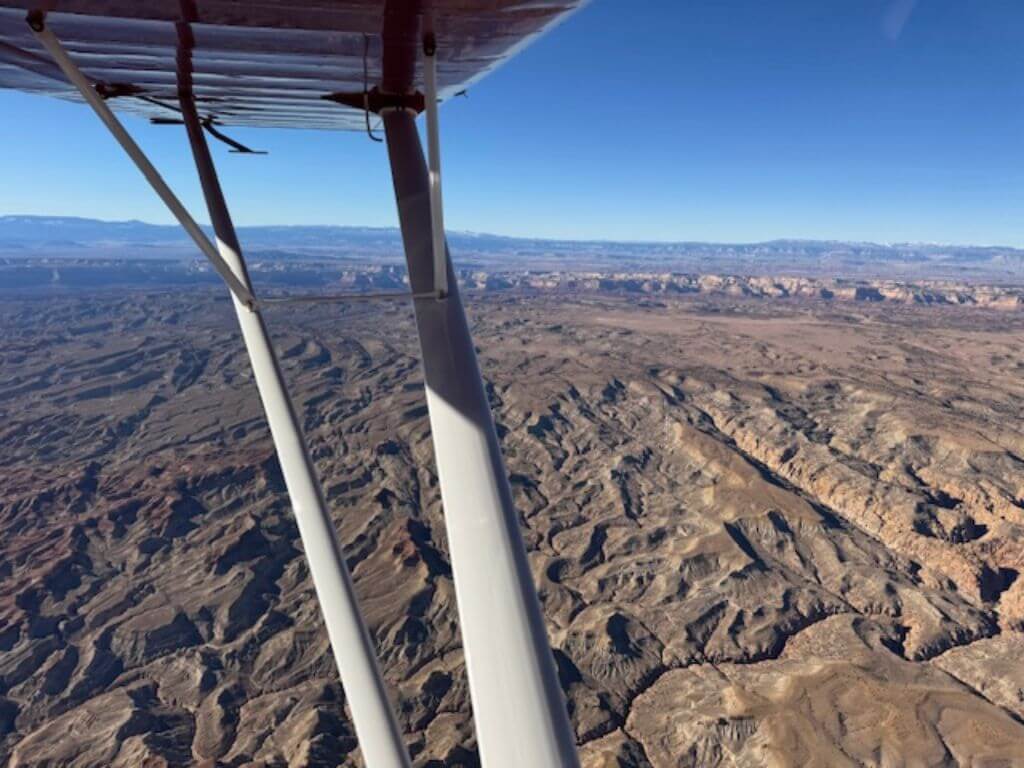
From Navajo Mountain, Dittmer flew to Kayenta, which he described as the mission’s hub. That’s where pilots can pick up additional loads and keep running routes until the boxes are delivered. Mission emails to pilots stressed that safety relies on planning: full weather briefings, route research, and conservative fuel assumptions. They cautioned that even a single fuel truck at Kayenta could run out. “I think that the key to any successful flight is the pre-planning,” Dittmer said. “Gaining as much information while you’re on the ground, because things take on a different level of risk when you’re in the air.”
He also said he was mindful of where he was — and the responsibility of landing on Navajo land. He explained that Backcountry Santa secures permission to land through the Navajo reservation. For certain destinations, individual pilots must register their aircraft before arriving.
For Dittmer, one of the day’s unexpected moments wasn’t a runway, a ridge line, or the dense radio chatter — it was seeing a familiar face in an unfamiliar place.
Dittmer encountered other pilots from Park City in Kayenta, whom he hadn’t known were pilots. The unexpected meeting highlighted the community’s involvement in the effort. It left him thinking about the quiet ways a community shows up — with time, fuel, skill, and airplanes — “not for recognition, but to make a long day in the air worth it.”
These experiences reiterated to Dittmer the “kindness, generosity, and talent of the Park City community.”
He plans to be back. This year was his first introduction to Backcountry Santa, he said, “but it won’t be my last.”
By: Rebecca Brenner


3267 W Deer Hollow Road, Unit 2305
Park City, UT 84060
80 West 300 North
Salt Lake City, UT 84103
2349 S Lava Vista Drive, Lot 32
Santa Clara, UT 84765
438 Castle Valley Drive
Castle Valley, UT 84532Talk of the Town


Park City Jobs

Sales & Marketing Coordinator – B2B Publishing, Power Trade Media
1 day ago Full time $40,000 - $45,000 yearly
Computer / Website Assistant, Summit Support
6 days ago Part time $20.00 - $30.00 hourly

Garden Steward and Educator, Summit Community Gardens and EATS
6 days ago Seasonal

PROGRAM AND EVENT COORDINATOR, PC READS
7 days ago Part time $25.00 hourly

Development Manager, Blue Sky Utah
7 days ago Part time $28.00 - $32.00 hourly