Politics
Brian Head land deal advances in Senate, raising questions about public land conveyance

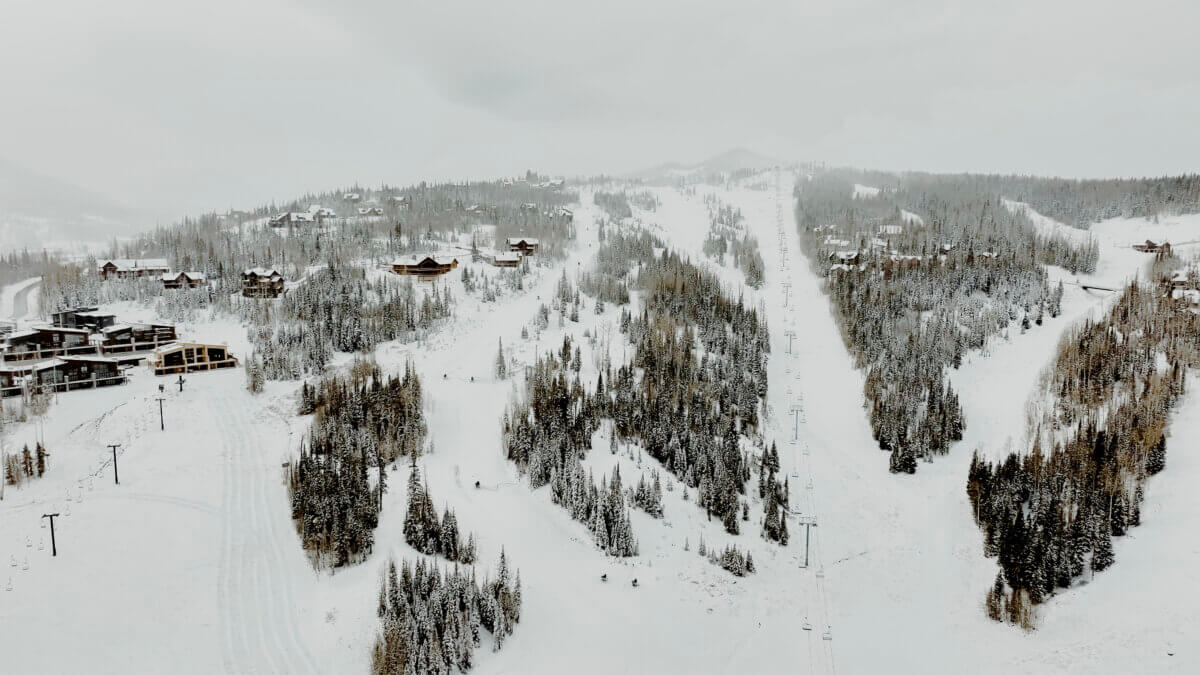
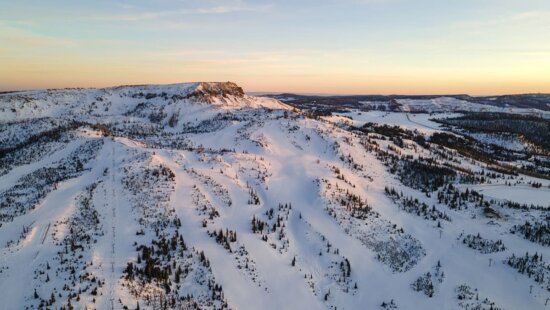
Aerial photo of Brian Head Resort. Photo: Brian Head Resort
WASHINGTON — A bill that would transfer roughly 24 acres of federally managed land to the southern Utah ski town of Brian Head is moving through Congress, drawing both bipartisan support and criticism from conservation groups concerned about precedent and public land protections.
The Brian Head Town Land Conveyance Act, introduced by U.S. Sens. Mike Lee (R-Utah) and John Curtis (R-Utah) would convey about 24 acres of land from the Dixie National Forest directly to Brian Head Town in Iron County. Supporters say the transfer would allow the town to expand and modernize its public works facilities as visitation and development accelerate.
The town currently stores equipment like snowplows on these 24 acres of federal land, but doesn’t own it. The conveyance bill aims to transfer this land to the town for free to expand their public works facility, solve storage issues, and support growth.
“Local communities understand their needs better than distant federal bureaucracies,” Lee said in a statement announcing the bill. Curtis echoed that sentiment, calling Brian Head “poised to become the next great Western ski town” and saying the legislation would give local officials the tools they need “free from federal red tape.”
Though modest in size, the proposal has sparked debate in Washington over how public lands are transferred and under what conditions.
Brian Head has a year-round population of about 150 residents but hosts hundreds of thousands of visitors annually, particularly during ski season. According to Lee, that seasonal influx places “enormous strain” on local infrastructure.
The bill advanced out of the Senate Energy and Natural Resources Committee in mid-December in a unanimous voice vote after negotiations between Lee and Sen. Martin Heinrich (D-N.M.), the committee’s ranking Democrat. Heinrich initially raised concerns that the legislation lacked a reversionary clause — a standard provision in land conveyance bills that requires the land to revert back to federal ownership if it is not used for its stated public purpose.
Without such a clause, Heinrich and others warned, the land could potentially be sold or developed for private use. “I would support the Brian Head Town Land Conveyance Act if it ensured that the public land would be used for a public purpose,” Heinrich said ahead of the vote. “Public lands belong in public hands.”
An amendment adding reversionary language was ultimately included, clearing the way for committee approval. The bill now awaits consideration by the full Senate.
Even with the amendment, some conservation groups remain opposed. They argue the bill still allows broad discretion for the town, does not require financial compensation or a land exchange, and bypasses typical administrative processes such as environmental review and public input.
“This is only about 20 acres, but it’s really about the precedent,” said Anneka Williams, policy director for the Winter Wildlands Alliance. “Where is the compensation for American taxpayers?”
Groups including the Southern Utah Wilderness Alliance have framed the bill within a broader debate over federal land ownership in the West. Lee, in particular, has long advocated for reducing federal control of public lands, a position that has drawn scrutiny in past legislative efforts.
“Sen. Lee failed this summer with his large-scale efforts to sell off public lands, so now he’s trying to give them away parcel by parcel,” D.C. director for the Southern Utah Wilderness Alliance Travis Hammill said in a statement. “This legislation would set a dangerous precedent.”
Supporters counter that the parcel is small, isolated, and of limited federal management value, and that land conveyances to local governments are not uncommon. They also note that the Forest Service has acknowledged the town’s infrastructure challenges and supports the transfer.
For now, the Brian Head proposal remains a relatively narrow piece of legislation with local implications. But as it heads to the full Senate, it has become a test case in a much larger conversation about how Congress should carve pieces out of the nation’s public lands system to meet the needs of growing communities.
By: Heather Bergeson


325 White Pine Canyon Road
Park City, UT 84060
80 West 300 North
Salt Lake City, UT 84103
438 Castle Valley Drive
Castle Valley, UT 84532
1511 S Valley View Circle
Springville, UT 84663
2349 S Lava Vista Drive, Lot 32
Santa Clara, UT 84765
3267 W Deer Hollow Road, Unit 2305
Park City, UT 84060Talk of the Town


Park City Jobs
Computer / Website Assistant, Summit Support
Today Part time $20.00 - $30.00 hourly


PROGRAM AND EVENT COORDINATOR, PC READS
1 day ago Part time $25.00 hourly

Development Manager, Blue Sky Utah
1 day ago Part time $28.00 - $32.00 hourly

Executive Assistant / Property Manager Administrator, Model HOA
1 day ago Full time $30.00 hourly