Environment
Birds before breakfast: Community science takes flight in Park City

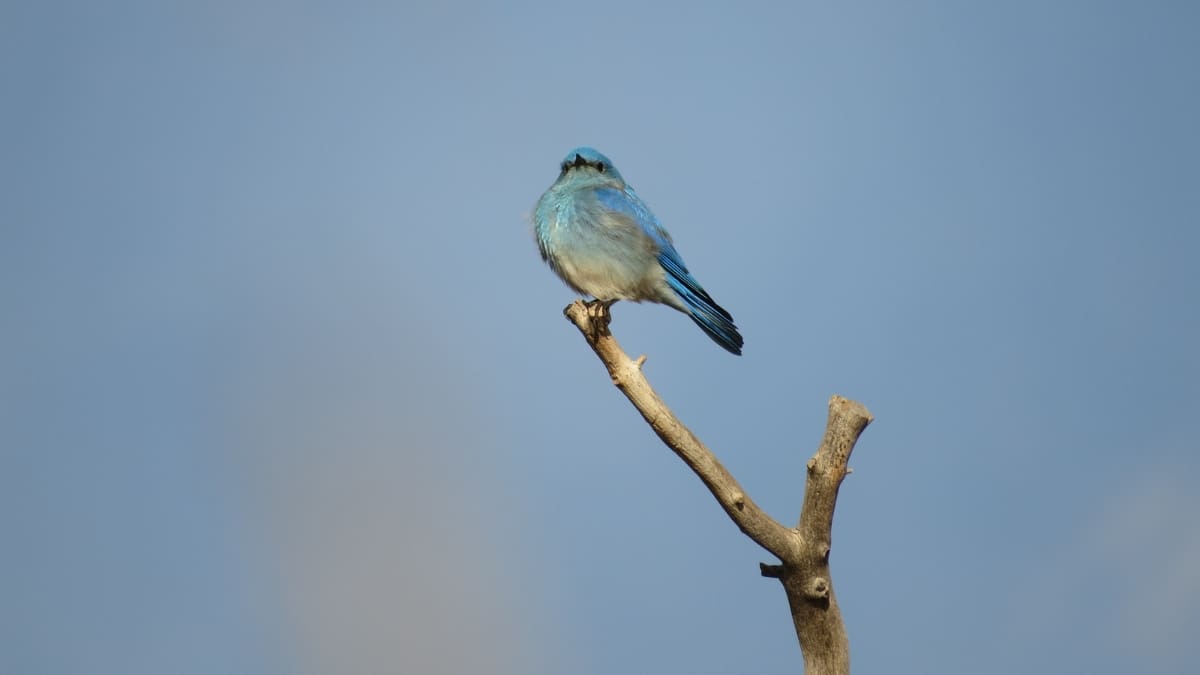
A mountain blue bird. Photo: Utah Division of Wildlife Resources Photo: Utah Division of Wildlife Resources
PARK CITY, Utah — Before most of Park City is awake on Sunday, Dec. 14, a small army of birders will gather at Swaner EcoCenter with steaming coffee, field guides, and binoculars in hand.
They’re heading out as part of the annual Christmas Bird Count, a community science project now in its 126th year that mobilizes volunteers across the Western Hemisphere to tally every bird they can see or hear in a single day. The Park City circle is one of thousands that feed data to the National Audubon Society, creating one of the longest-running wildlife datasets in the world. “This is a great opportunity to be a community scientist: collecting data and contributing to research on how bird populations are shifting over time,” said Rhea Cone, Swaner’s director of conservation.
Locally, the count is hosted at Swaner Preserve & EcoCenter, where participants will meet at 8 a.m. for coffee and snacks before fanning out to assigned territories from Park City to Peoa.
Unlike a typical guided outing at Swaner, this event is designed for participants with at least a basic grasp of bird identification. After a brief orientation at the EcoCenter, organizers will split participants into teams and send them to pre-determined areas within the official Park City count circle. Each team is responsible for recording every species they encounter — from magpies and mallards to winter raptors and finches — during the morning survey window.
No counts will take place solely on the Swaner Preserve; instead, the EcoCenter serves as the launch point for a much larger, landscape-scale effort coordinated with Utah Birders and other local partners.
The Christmas Bird Count was originally created in 1900 as a conservation-minded alternative to the holiday “side hunt,” a competition where groups tried to shoot as many birds and mammals as possible. Today, it’s regarded as the world’s longest-running community science bird survey and a critical source of information about population trends, range shifts, and the impacts of climate change.
For many volunteers, though, the draw is more immediate: a quiet winter morning outside, scanning treetops and fence lines, and contributing to something larger than a single outing. Long-term CBC data have helped scientists document changing migration patterns, declines in some species, and surprising increases in others across North America.
Participants in the Park City count should be prepared to drive or carpool from Swaner to their assigned sector, dress for several hours outdoors, and bring any usual birding gear. Binoculars are available to borrow from Swaner for those who need them. While beginners are welcome to join, organizers recommend that each field team have at least one person comfortable identifying common birds by sight — and, ideally, by sound — to keep the data reliable.
The Park City Christmas Bird Count is free, but space is limited, and advance registration is required. To RSVP and receive details on what to bring and how the morning will unfold, email Swaner’s Rhea Cone at rhea.cone@usu.edu.
“If anyone is looking to join a group or not drive themselves, I will plan to head out with a Swaner vehicle to one of the survey areas for the morning,” Cone said.
By: Rebecca Brenner


438 Castle Valley Drive
Castle Valley, UT 84532
2349 S Lava Vista Drive, Lot 32
Santa Clara, UT 84765
3267 W Deer Hollow Road, Unit 2305
Park City, UT 84060
80 West 300 North
Salt Lake City, UT 84103Talk of the Town


Park City Jobs

Computer / Website Assistant, Summit Support
4 days ago Part time $20.00 - $30.00 hourly

Garden Steward and Educator, Summit Community Gardens and EATS
4 days ago Seasonal

PROGRAM AND EVENT COORDINATOR, PC READS
5 days ago Part time $25.00 hourly

Development Manager, Blue Sky Utah
5 days ago Part time $28.00 - $32.00 hourly

Executive Assistant / Property Manager Administrator, Model HOA
5 days ago Full time $30.00 hourly