Environment
Bill White’s farm shows how agriculture can help restore Great Salt Lake


A mural with a nod to the history of the Huntsville Abbey Farm adorns a barn on the farm. Photo: Summit Land Conservancy
PARK CITY, Utah – When farmer Bill White bought the historic Trappist monastery in Huntsville in 2016, he wasn’t thinking about saving the Great Salt Lake. He and his wife were focused on preserving the century-old farm the monks had tended for generations. But nearly a decade later, the land he protected has become the center of one of Utah’s most closely watched water-conservation experiments — one that could send more than 635 acre-feet of water a year to the struggling lake.
“When we purchased the property, we started working on a conservation easement. It took about seven years, but by the time it was finished, the Great Salt Lake was in the news almost every day,” White said.
That timing, he said, shaped everything that came next.
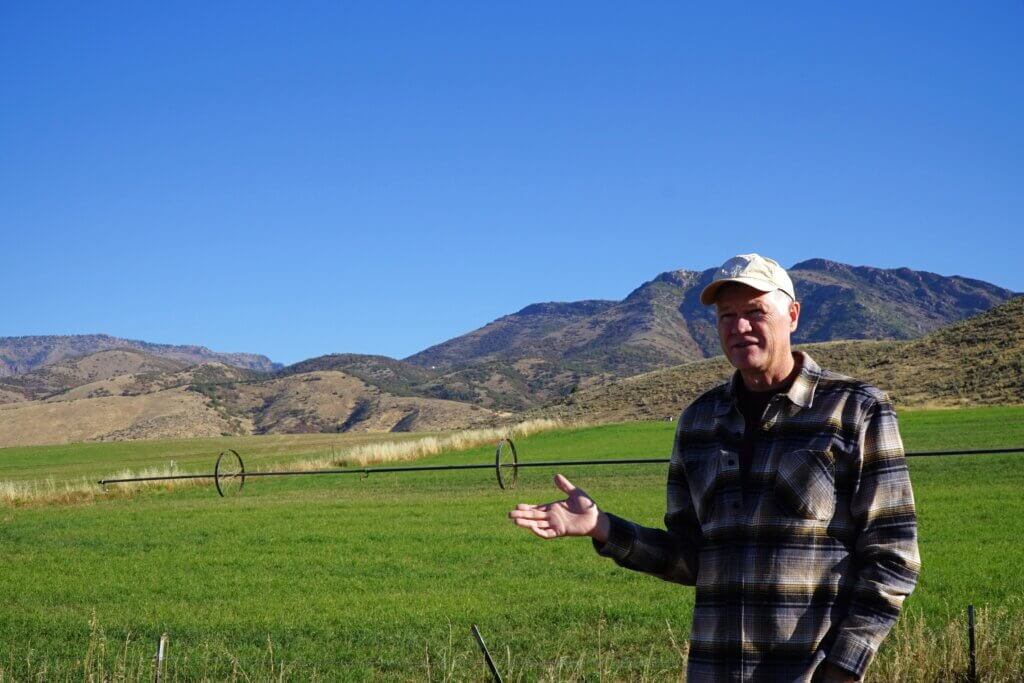
As Summit Land Conservancy and Ogden Valley Land Trust finalized the 1,050-acre conservation easement in 2022, partners added a new provision: the ability to dedicate a portion of the farm’s senior water rights to conservation purposes — including flows for the Great Salt Lake.
“When we finished — or were about to finish — the easement, they put a clause in that allowed some of the water rights to be used for conservation,” White said. “Meaning in-stream flows, or for the Great Salt Lake.”
White agreed. And that opened the door to the pilot project now under review.
White is dedicating 215 acres of land and 645 acre-feet of irrigation water — roughly the amount that could supply about 1,300 homes per year — to the 10-year pilot program.
That’s about a quarter of his water.
But he says the shift doesn’t harm farm operations.
“We’re not losing any farming or production,” White said. “Every farm, including ours, has acres that are much less productive because of rocky soil, and we put a ton of water on those acres to try to produce. It’s not worth the effort. So those acres will be planted in native grasses and won’t be irrigated during the pilot.”
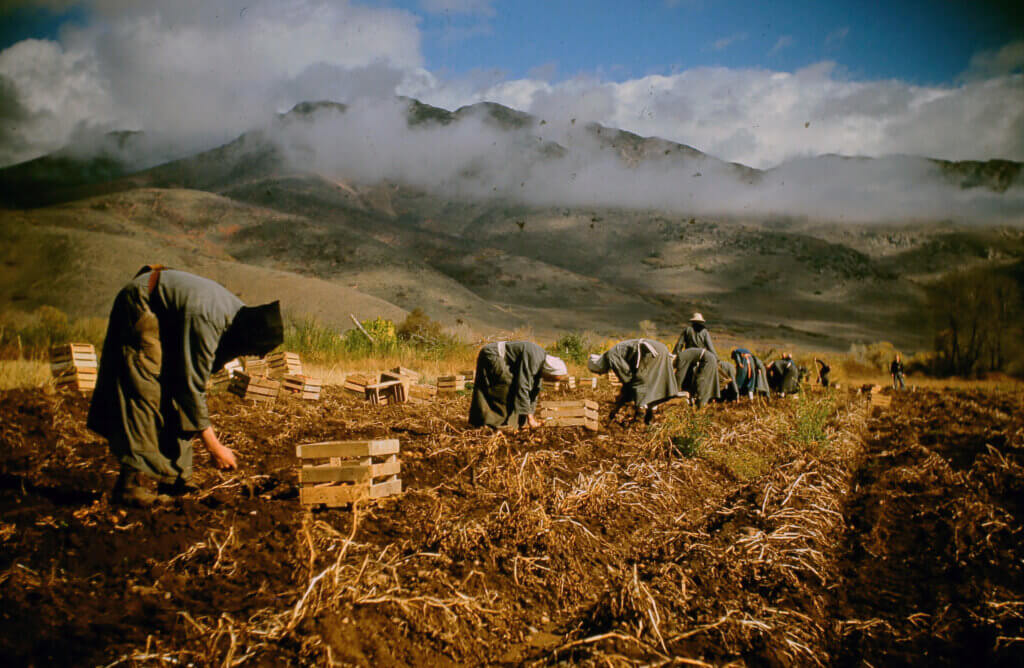
The state will compensate the farm at a rate equivalent to — or even higher than — the revenue those fields would normally generate.
“For farmers and the state, it could be a win-win,” White said. “Farmers could be more profitable. The state gets lots more water to the Great Salt Lake.”
A model meant for other farmers
White says the goal is not just to save water on one farm, but to create a model that other producers can see, walk, and consider for themselves.
“Once we get it in place, farmers will be able to come to the property, talk to us and to our farm manager, and see how it’s working,” he said. “Then they can discuss how it affects profitability.”
A major barrier to water conservation in Utah has been the state law requiring farmers to use their water rights or risk losing them — a rule that historically prevented farmers from leaving fields unwatered.
“This program solves that problem,” White said. “You can lease your water to the Great Salt Lake. It does not mean you’ll forfeit the water — that’s a type of beneficial use. We’re trying to create a template that’s super flexible.”
That flexibility, he said, allows farmers to join for a year or two, step out if needed, and re-enter later.
“The idea is to get thousands of farmers to participate, even on a small scale, so the impact on the Great Salt Lake is significant.”
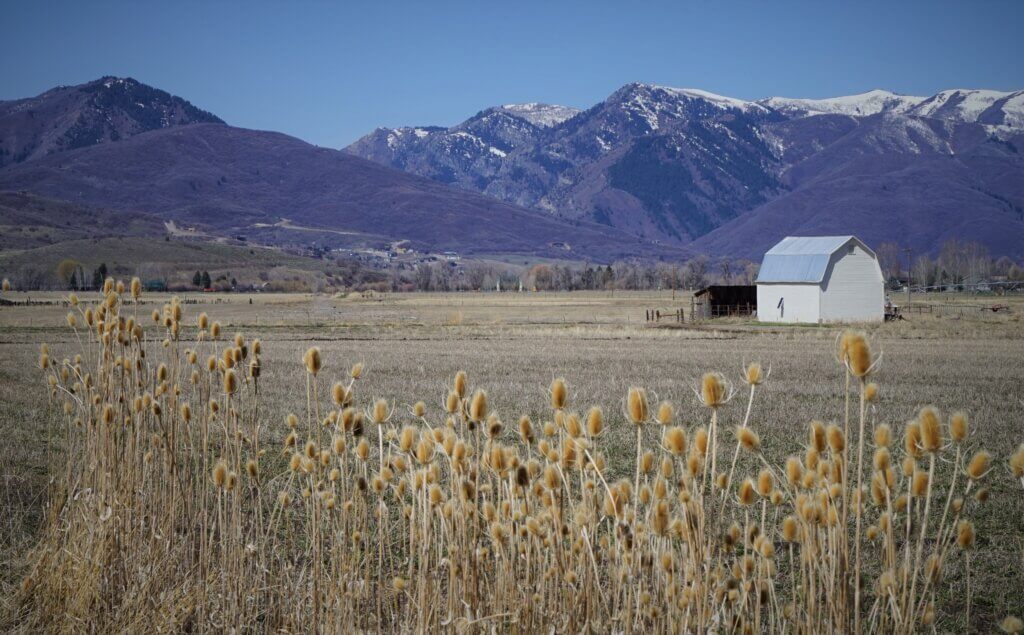
Partners see White’s participation as pivotal
Summit Land Conservancy CEO Cheryl Fox said White’s leadership is part of a much larger picture.
“When we save farms and ranches across the Wasatch Back, we’re also saving the watershed for the Great Salt Lake,” Fox said. “Water is now available to return to the lake, rather than being diverted to a subdivision.”
Caitlin Willard, vice president of communications for Summit Land Conservancy, called the Huntsville project “a transformative pathway to send new water to Great Salt Lake,” emphasizing that the farmland will remain in production.
The Great Salt Lake Watershed Enhancement Trust — co-managed by the National Audubon Society and The Nature Conservancy — has been working for three years to secure new water for the lake. Executive director Marcelle Shoop called White’s pilot “an innovative example of broad collaboration.”
The Weber Basin Water Conservancy District will monitor and measure the water as it flows through the Ogden River system into Great Salt Lake wetlands.
Spencer Gibbons, CEO of the Utah Farm Bureau, said White’s farm demonstrates that agriculture and conservation don’t have to be at odds.
“Solutions that keep farmers farming and also send water to the lake can inspire others across the agricultural sector,” Gibbons said.
The pilot water lease is under review, with approval expected in early 2026.
Great Salt Lake Commissioner Brian Steed said every contribution matters.
“Large or small, these efforts play an important part in supporting the lake,” Steed said.
For White, the project is both practical and personal — a way to preserve the land he inherited from the monks, and a way to help solve one of Utah’s biggest environmental challenges.
“We need agriculture. We need food security,” he said. “But we can be more efficient. And if this works, it could help thousands of farmers — and the lake — at the same time.”
By: Marina Knight


325 White Pine Canyon Road
Park City, UT 84060
1511 S Valley View Circle
Springville, UT 84663
2349 S Lava Vista Drive, Lot 32
Santa Clara, UT 84765
438 Castle Valley Drive
Castle Valley, UT 84532
80 West 300 North
Salt Lake City, UT 84103
3267 W Deer Hollow Road, Unit 2305
Park City, UT 84060Talk of the Town


Park City Jobs

Hiring Barista Assistants and Baristas, Silver King Coffee
2 days ago Part time $17.00 - $30.00 hourly

General Maintenance Technician, Moose Management Vacation Rentals
6 days ago Full time

Office Coordinator, Park City Community Foundation
9 days ago Full time $50,000 - $55,000 yearly

Summit Land Conservancy Programs Specialist, Summit Land Conservancy
9 days ago Full time
Vice President of Finance, Park City Community Foundation
9 days ago Full time $115,000 - $130,000 yearly