Environment
DEQ investigates Park City School District contractor for unpermitted discharge into city creek

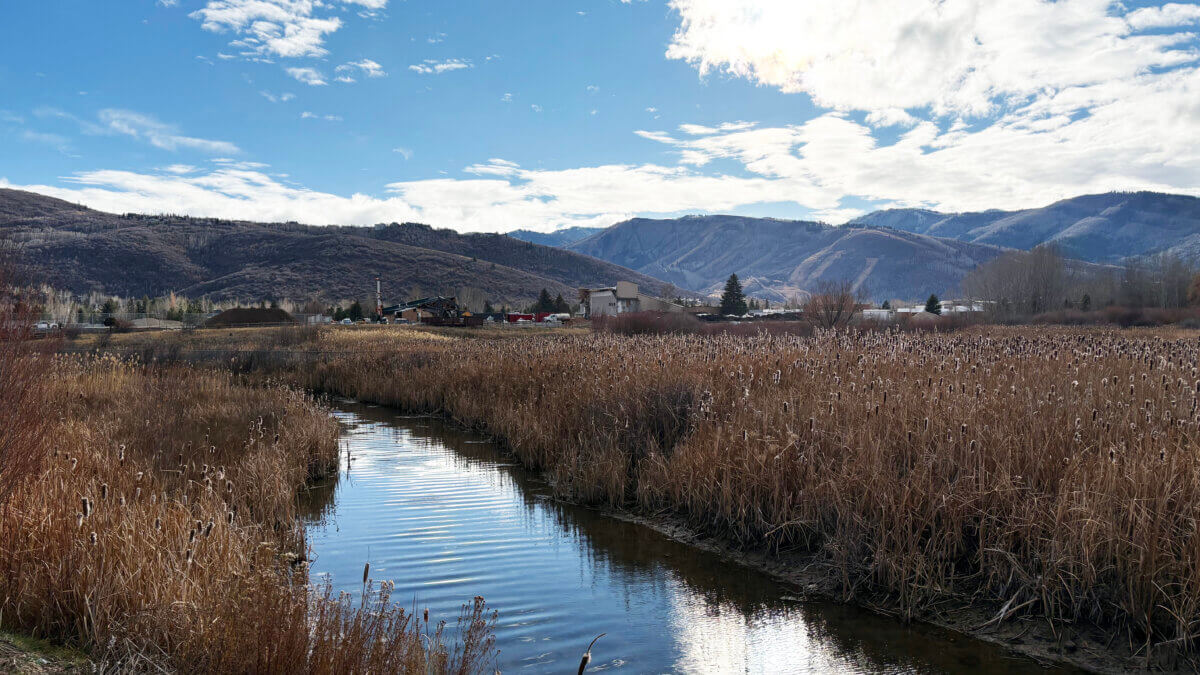
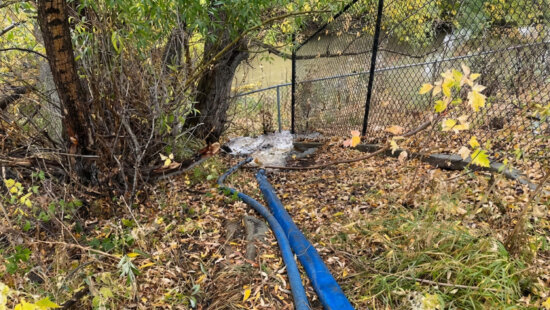
A view of the Treasure Mountain Junior High School and the creek that runs along its eastern site perimeter from the North 40 playing fields on November 19, 2025. Photo: Marina Knight // TownLift
PARK CITY, Utah – Following a whistleblower’s allegations of environmental violations during Park City School District’s demolition of Treasure Mountain Jr High, city and county officials confirmed this week those allegations involved not just asbestos but contaminated water.
PCSD provided TownLift with results from two water samples taken from the job site and sent to a lab on August 15, months before the discharge on October 10. The tests showed elevated levels of arsenic and lead that exceeded Utah’s legal limits for a Class 1C drinking-water source, confirming the water was contaminated under state water-quality standards. The same samples did not reach the much higher toxicity thresholds required for water to be classified as hazardous waste under federal or state regulations. This means the water violated Utah’s drinking-water source standards but was not concentrated enough to qualify as hazardous waste.
According to several entities with direct knowledge of the project, the contractor discharged water from the construction site into the creek. The amount and compliance status of the discharge are under review by state regulators. PCSD says that on the day water was discharged from the construction area, the contractor immediately reported the incident to the Utah Department of Environmental Quality (DEQ) spills hotline.
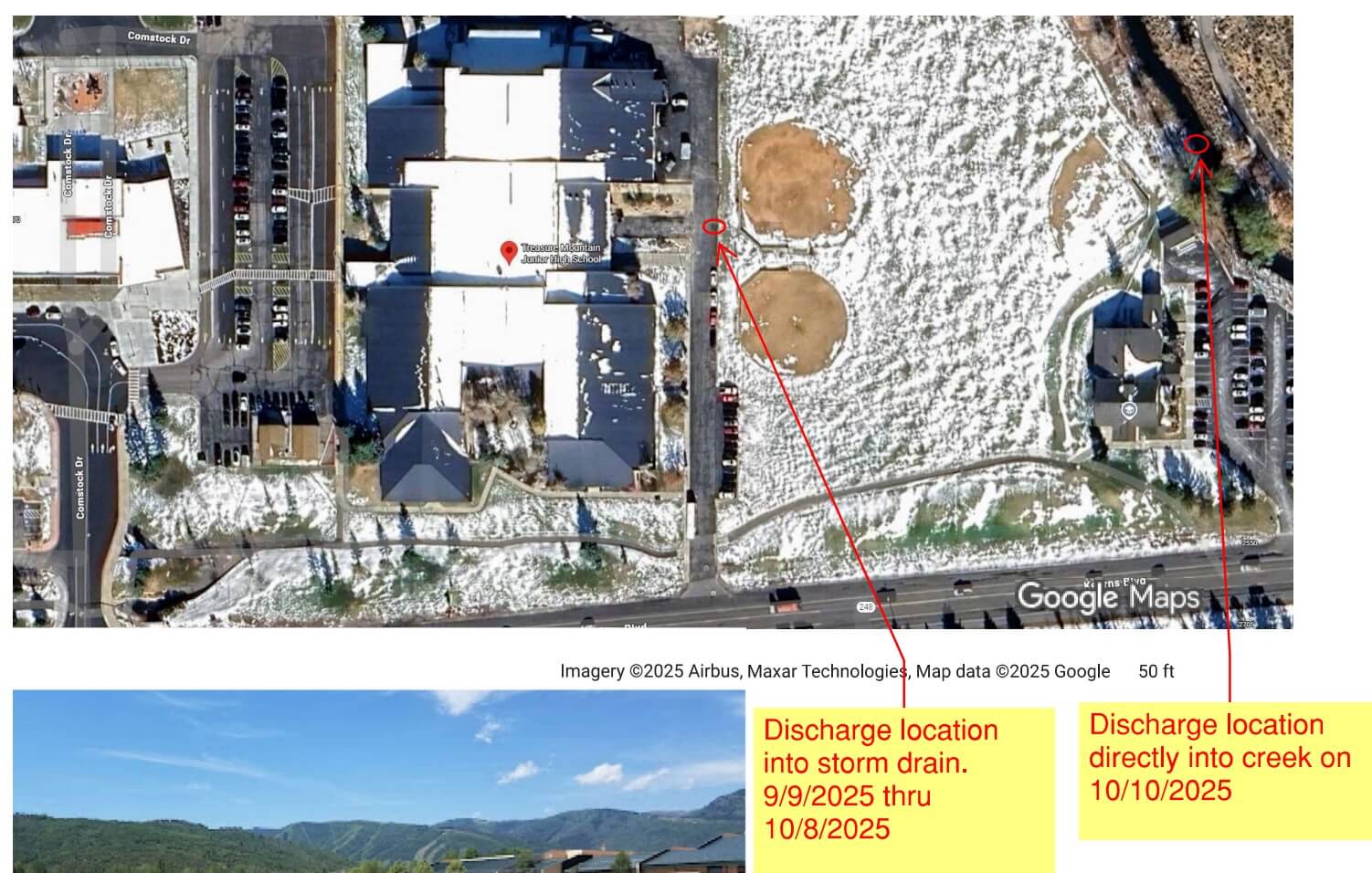
The action occurred east of the school, where the creek runs through the fields at the North 40, past the school and under SR 248 into Silver Creek, which flows along the recreation path toward Quinn’s Junction.
Park City Municipal confirmed they were aware of the discharge.
TownLift has filed a GRAMA request with the Utah Division of Water Quality to obtain the contractor’s reports and the agency’s investigative findings.
A whistleblower told TownLift that contractors may have been pumping an estimated 19,000 gallons per day into the creek for more than a week. Records provided by the district show a different timeline. According to pump logs, there was only one discharge into the creek, on Oct. 10, lasting about three hours and totaling about 26,500 gallons. The logs show the pump ran 17 times between Sept. 9 and Oct. 8, with daily volumes ranging from about 10,000 to 35,000 gallons routed into the storm drain. The Oct. 10 event into the creek was pumped at 147 gallons per minute, a rate about two and a half times higher than every other recorded discharge.
State and federal rules require dewatering water to be managed under approved discharge pathways, which can include testing, containment, or routing through permitted stormwater systems. Sending it directly into a creek without authorization violates Utah stormwater regulations.
The Treasure Mountain Junior High property is governed by a CERCLA (Superfund) environmental agreement because the area sits atop historic mining waste. Lead- and arsenic-laden soils were excavated from the campus during a prior remediation effort, and regulators require tighter controls on excavation, dust and water movement to prevent re-exposing contaminated material.
“The Health Department is currently assessing the situation and is working with city and state partners on next steps,” Derek Siddoway, Public Information Officer for the Summit County Health Department, said Thursday.
City and county officials did not respond to requests for comment regarding whether the creek downstream from the construction site is currently safe for people or their pets to come in contact with. Superintendent Lyndsay Huntsman said the district has a certified environmental specialist on-site daily and that DEQ personnel conduct additional monitoring visits several times a week. The DEQ did not respond to a request for comment about the alleged violations Thursday.
EPA Region 8 spokeswoman Katherine Jenkins told TownLift she was reviewing information about the water discharge, and did not provide comment by deadline.
News of the water discharge comes after the district addressed another whistleblower allegation this week flagging a construction compliance notice involving improper handling of asbestos. With that, district officials sent employees an internal memo Wednesday explaining demolition was stopped as soon as asbestos was discovered. That may contradict a letter the district received from environmental consultants Cripple Creek, describing asbestos concerns at the site in September.
That letter reads in part: “Tucker Jay Smith (ASB-8180), conducted an asbestos survey update on September 16th, 2025. This update occurred after reviewing the hard copy of the Management Plan, in which it was noted that the surfacing material had been abated. Before demolition had occurred to the asbestos containing surfacing material, Cripple Creek learned that the material abatement note was not correct and immediately scheduled a full asbestos survey.”
District officials ended their contract with R&R environmental last month and brought on a new environmental consultant group. The district says the contractor transition resulted from a routine contract review and was not related to the discharge or asbestos compliance notice.
PCSD said Thursday it was changing contractors to provide full time environmental site management. District spokesman Colton Elliott said in a statement the change was also due to “other performance and communication factors.”
In addition, school board Vice President Nick Hill said Thursday in an interview with KPCW, that district officials had ‘no evidence’ of any corner-cutting by the General Contractor, Hogan Construction.
Publisher’s note: This story has been updated to include lab results from the Aug. 15 water test and pump-log records provided to TownLift by PCSD. These documents clarify the contamination levels present before the Oct. 10 discharge and confirm the site’s pumping activity. The article has been revised to reflect this information. The creek’s location on the east side of the site not the west.
By: Marina Knight


2349 S Lava Vista Drive, Lot 32
Santa Clara, UT 84765
80 West 300 North
Salt Lake City, UT 84103
438 Castle Valley Drive
Castle Valley, UT 84532
3267 W Deer Hollow Road, Unit 2305
Park City, UT 84060Talk of the Town


Park City Jobs

Junior Interior Designer, Abigail Hill
Today Contractor

Dental Assistant, Rise Dental Wellness
1 day ago Full time

Sales & Marketing Coordinator – B2B Publishing, Power Trade Media
3 days ago Full time $40,000 - $45,000 yearly

Computer / Website Assistant, Summit Support
7 days ago Part time $20.00 - $30.00 hourly

Garden Steward and Educator, Summit Community Gardens and EATS
8 days ago Seasonal