Walk to End Alzheimer’s raises awareness, but Alzheimer’s support happens year-round


PARK CITY, Utah — As the Summit and Wasatch counties community prepares for its annual Walk to End Alzheimer’s this month, Lisa Phinney said her focus is making sure people know what the organization actually does between Walks.
“The Walk isn’t just one day in September,” Phinney said. “It’s what keeps our helpline (800-272-3900) open every hour of every day, funds the care and support families need right now, and drives the advocacy and research that will get us closer to a cure.”
Phinney recently stepped into a new role as chapter executive of the Alzheimer’s Association’s Utah and Nevada chapters, part of a broader reorganization at the national organization.

Walking in Park City
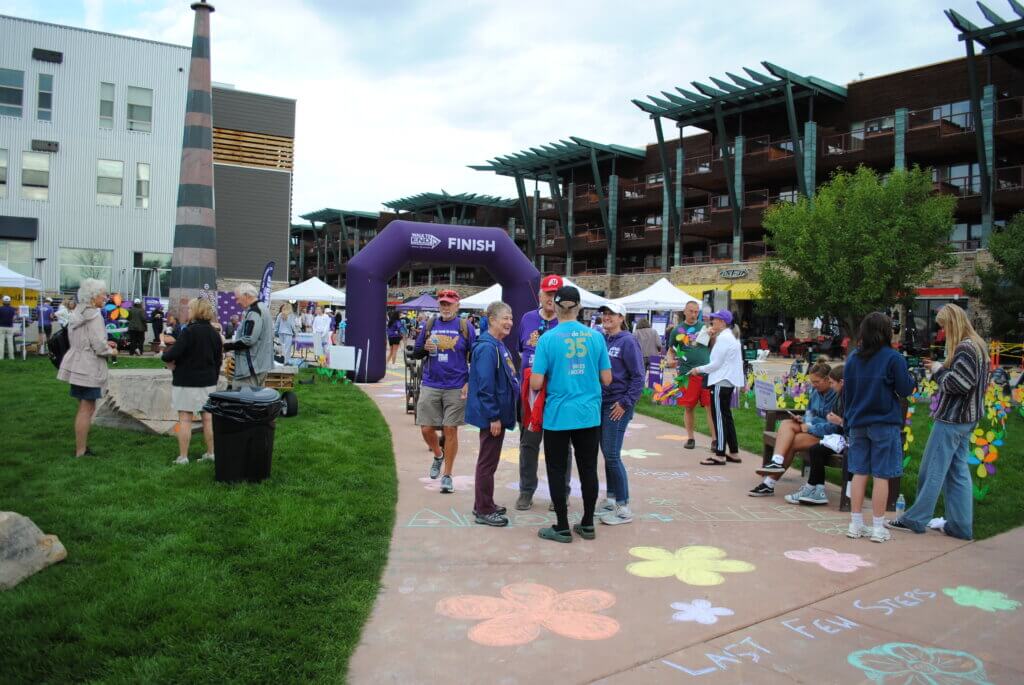
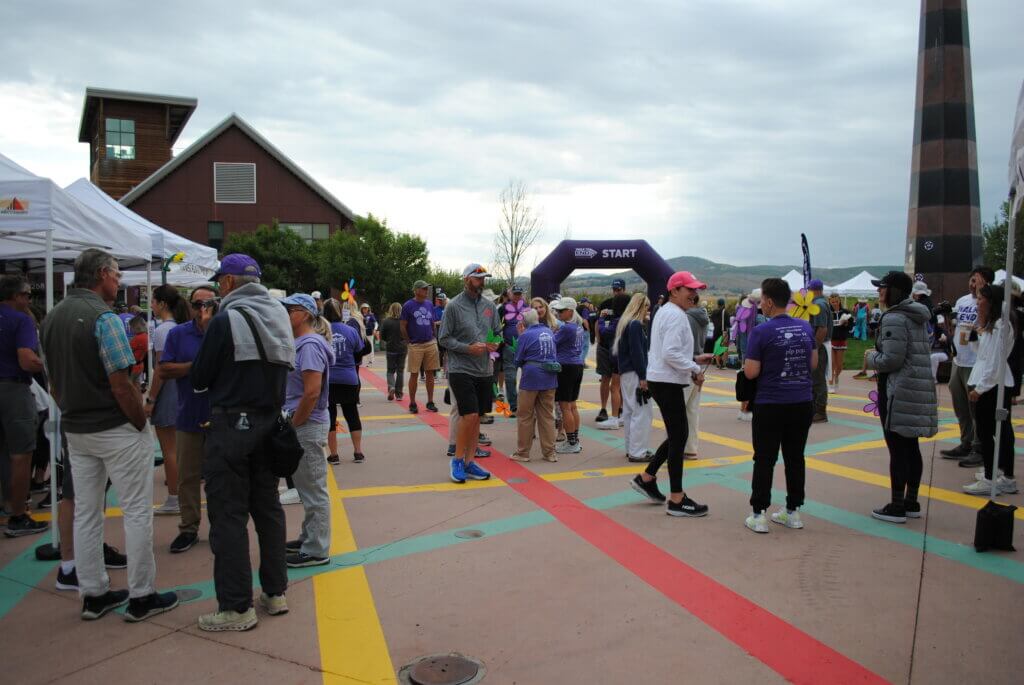
The Summit/Wasatch County Walk offers a leisurely course along the Swaner Preserve, drawing about 500 participants to Newpark Village. The venue opens at 9 a.m. with the Association booths providing information and sponsors like The Bagel Den bringing refreshments and Fetch providing puppy snuggles.
Since 2016, Edward Jones and the Alzheimer’s Association have been united through a historic strategic alliance, with Edward Jones proudly serving as the National Presenting Sponsor of the Alzheimer’s Association’s Walk to End Alzheimer’s in hundreds of communities each year. Now in its 11th year as National Presenting Sponsor, Edward Jones has extended its alliance with the Alzheimer’s Association through 2030, reaffirming its promise to stay in the fight against Alzheimer’s disease.
That commitment is personal for Justina Smith, this year’s executive event chair for the Summit/Wasatch County Walk and an Edward Jones employee. Smith has set her own goal of helping Edward Jones raise $1 million across Utah over five years, a target that reflects the same dedication driving the national alliance forward.
As of publication, 180 people and 43 teams had registered, with a goal of 522 walkers and 70 teams. The event has raised about $118,000 toward a $220,000 goal.
Registration is free; fundraising is encouraged, Phinney emphasized.
“Fundraising matters; it’s what funds these resources in the first place,” she said. “But I also want as many people as possible at this free event because just showing up spreads awareness of what the Alzheimer’s Association offers.”
Anyone who raises $500 or more becomes a “champion,” a title 74 Park City walkers earned last year, more than any other Utah Walk, according to Phinney.
The Promise Garden
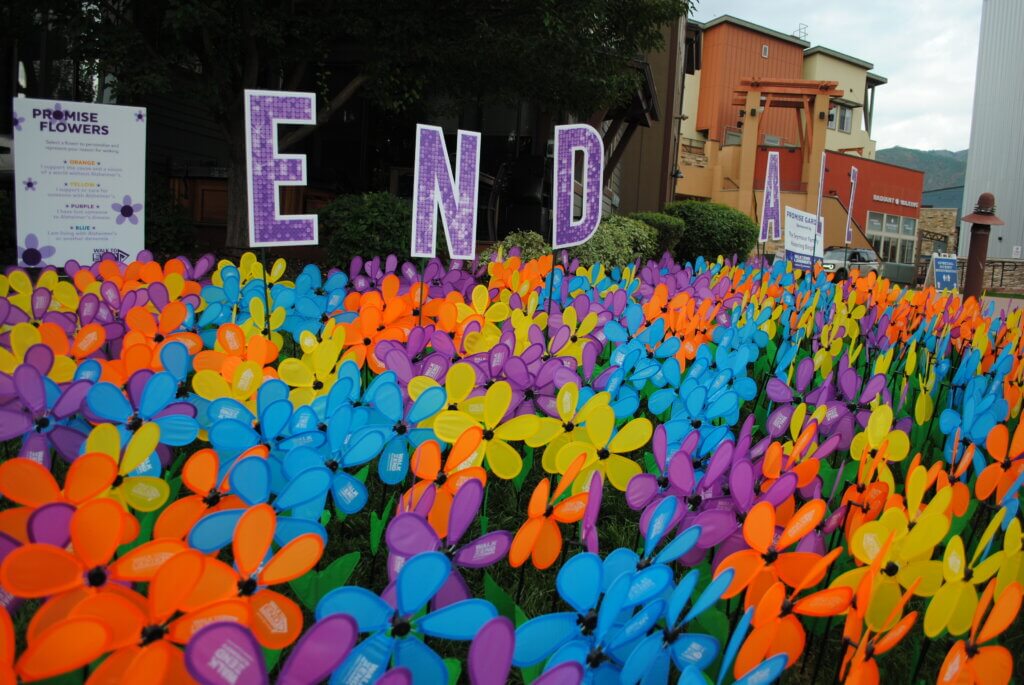
Each year’s Walk includes a Promise Garden ceremony, where participants pick up a pinwheel flower in a color tied to their connection to the disease. Blue represents someone living with Alzheimer’s or another dementia; purple represents someone who has lost a loved one to the disease; yellow represents someone currently caring for a person living with Alzheimer’s; orange represents a supporter of the cause; and white represents hope for a cure and the first cure.
The cause is personal for Phinney, too. She said three generations of women in her family have carried the name Adeline, including her 18-year-old daughter. The first two Adelines both died of dementia later in life.
Local services, not just a walk day
Phinney said the Utah chapter offers free education and awareness presentations to small groups and major corporations across Summit and Wasatch counties, covering topics such as brain health, warning signs of dementia and how to manage finances for a loved one with the disease.
She pointed to the Association’s 24-hour helpline (800-272-3900), staffed by clinicians and available in more than 200 languages. “No question is too small or insignificant,” she said.
Phinney also cited a growing public policy push. The Association is backing the ASAP Act, federal legislation aimed at getting Medicare and Medicaid to cover blood tests that screen for the proteins associated with Alzheimer’s disease. Advocates who want to share their stories with lawmakers can do so through the Association, she said.
Early detection has advanced quickly this year. According to the Alzheimer’s Association, the U.S. Food and Drug Administration has cleared a new blood test for symptomatic patients as young as 40, following an earlier 2025 clearance of a separate blood-based test for patients 55 and older. The tests measure proteins linked to Alzheimer’s disease and are intended for patients already showing signs of cognitive impairment, not for people without symptoms, according to the Association.
Ways to get involved beyond the Walk
In addition to the Walk, the Alzheimer’s Association has a fundraising initiative called “Do What You Love to End Alz,” for people who want to turn their passion into purpose. Whether it is skiing, hiking, playing mahjong, or bingo – anything is possible! Park City hosted a pickleball tournament two years ago that raised over $20,000! It’s a way to fundraise your way.
There are seven Walks in Utah: Cedar City, Cache County, Summit/Wasatch County, Salt Lake County, Utah County, Weber/Davis County, and St. George in September and October.
Businesses interested in sponsoring a booth at the Walk can find more information on the Walk website or contact Ryan Beany at 772-359-8007 or rbeany@alz.org.
“I really feel like people are very connected to this cause,” Phinney said. “In Utah, almost everybody knows someone affected by it, whether as a caregiver, someone diagnosed, or someone who’s lost a loved one. That’s what makes this event so powerful. It’s a chance for the whole community to come together and support one another.”
Register to Walk today as a walker or as a team to help find a cure, support helplines (800-272-3900), and support families affected by Alzheimer’s and dementia.


4251 E Lipizzan Jump
Moab, UT 84532