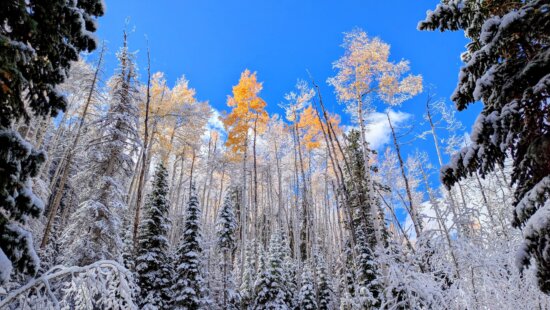
Fall arrives Tuesday with the autumnal equinox


PARK CITY, Utah — Fall officially arrives Tuesday evening, as the autumnal equinox marks the astronomical start of a new season in the Northern Hemisphere.
According to NASA, the equinox occurs at 6:05 p.m. Mountain Time on Sept. 22, when the center of the Sun crosses Earth’s equatorial plane. The moment marks the beginning of astronomical fall in the Northern Hemisphere and spring in the Southern Hemisphere.
The word “equinox” comes from Latin words meaning “equal” and “night.” NASA notes that day and night are close to equal in length around the world at the equinox, though they are not necessarily exactly 12 hours each.
The Old Farmer’s Almanac describes the autumnal equinox as the moment the sun crosses the celestial equator from north to south. After the equinox, days in the Northern Hemisphere continue to grow shorter as sunrise comes later and nightfall arrives earlier.
Earth’s changing seasons are caused by the planet’s roughly 23.5-degree axial tilt as it travels around the Sun. At the equinox, neither hemisphere is tilted more toward the sun, so the two hemispheres receive roughly equal amounts of sunlight, according to NASA.
Astronomical fall will continue through Dec. 20, according to The Old Farmer’s Almanac, with winter beginning at the December solstice. Meteorological fall follows a different calendar and runs from Sept. 1 through Nov. 30.
The seasonal change also comes with another reason to look up. NASA says the Harvest Moon arrives Sept. 26 and will appear near Saturn and Neptune in the evening sky.
For Park City, the equinox marks a transition already becoming visible across the Wasatch Back: summer is ending, daylight is fading, and fall has officially begun.


2266 E Garfield Avenue
Salt Lake City, UT 84108